
Is mediation like therapy?
Absolutely not, mediators cannot make judgements, diagnosis or attempt to be psychologists. We cannot try save your marriage, your business or interests, but we can help save your sanity!
Mediation is a guided process that helps both sides reach fair agreements without constant conflict.
A neutral mediator helps everyone talk, understand each other, and agree on solutions that work for all. Unlike going to court, which can be slow, stressful, and expensive… mediation is faster, friendlier, and puts you in control of the outcome.
How is mediation different from going to court?
Court can be slow, costly, and stressful, and in the end, a judge decides for you. Mediation is private, more affordable, and gives you control over the outcome.
What does a mediator do?
The mediator stays neutral. They don’t take sides or make decisions for you. Their job is to guide the conversation so it stays respectful and focused.
Is mediation legally binding?
If both sides agree, your arrangement can be put in writing and made legally binding. If not, it still serves as a clear mutual understanding.
What if we can’t agree?
No problem. You can always go to court later. Nothing is lost by trying mediation first.
Do I need a lawyer?
No, but you can bring one for the legal advice. The mediator does not provide legal representation, we just keep things neutral, calm and navigate the conflict.
Is mediation confidential?
Yes. What’s said in mediation stays private. Unlike court, where proceedings are public, mediation is completely confidential.
What kinds of problems can mediation solve?
It can help with disputes over money, property, parenting plans, contracts, workplace issues, or neighbourhood disagreements, basically, almost any conflict.
Can mediation save relationships?
Often, yes. Mediation focuses on understanding and compromise, which reduces tension and helps people move forward without lasting resentment.
How long does mediation take?
Most sessions last one to two hours. More complex cases may need multiple meetings.
How do I get the other party to agree?
People are usually open once they understand mediation is faster, cheaper, and less stressful than court. Explain to the other party that it puts both sides in control, is private, and can save time and money. The mediator can also help invite them in a neutral, non-confrontational way.
Why Choose Mediation?
Cost Effective: Significantly lower legal fees than traditional litigation.
Confidential: Unlike court, your private matters remain strictly private.
Faster Results: Resolved in weeks, rather than years of court delays.
"What I expected to be a legal battle became a practical plan. Blackthorn Resolute provided the calm we desperately needed."
— Private Client










The Role of the Family Advocate
When parents separate or disagree about their children, the conflict can quickly become more complicated than…
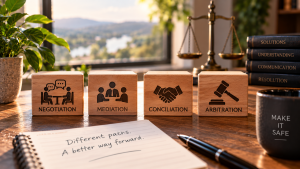
Types of Alternative Dispute Resolution (ADR)
When people hear the word dispute, they often imagine lawyers, courtrooms, legal bills and months of…

The Landmines Found in Destructive Arguments: 5 Things That Make Conflict Worse
Have you ever been in an argument that was going reasonably well until someone said that…

The Danger of “Bad Words”: Why What You Say Isn’t Always What People Hear
Have you ever said something completely reasonable, only to watch the other person react as though…

What Happens During Negotiations?
We make negotiation practical, strategic, and results-focused. Our negotiators act on your behalf, protecting your interests…