
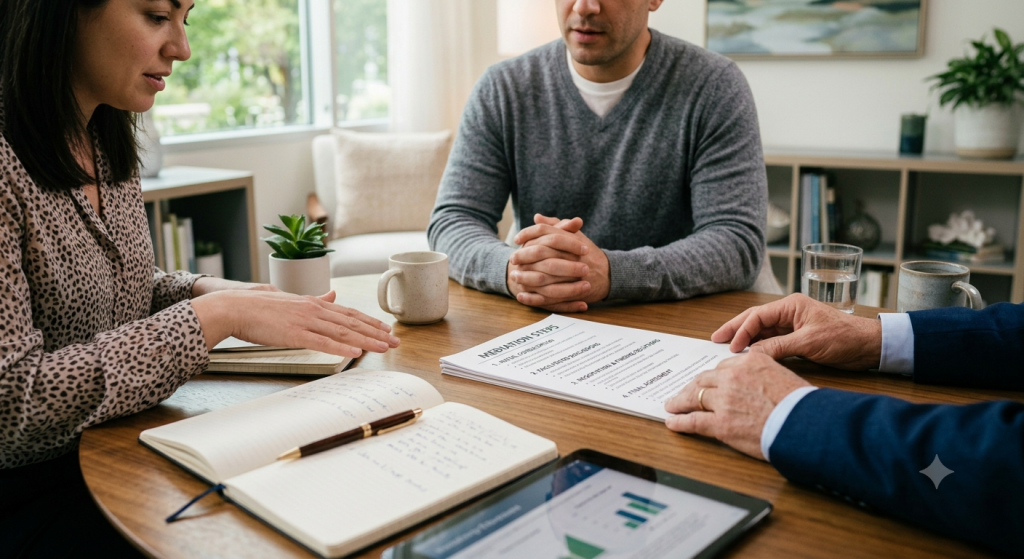
Introduction
Conflict is part of life. Families disagree, businesses experience disputes, and relationships sometimes reach difficult moments where communication breaks down.
But conflict does not always need to become a legal battle.
Mediation is a structured process where an impartial third person, called a mediator, helps people communicate, understand each other’s concerns, and work toward a mutually acceptable solution.
Unlike a court process where a decision is imposed by a judge, mediation gives the people involved the opportunity to create their own agreement.
How Does Mediation Work?
Mediation provides a safe and structured environment where everyone has the opportunity to be heard.
The mediator does not take sides, decide who is right or wrong, or force anyone into an agreement.
Instead, the mediator helps guide the conversation so the parties can:
- understand the real issues behind the conflict
- communicate more effectively
- explore possible solutions
- reach an agreement that works for everyone involved
What Happens During Mediation?
We make mediation straightforward, supportive, and effective.
Our mediators are neutral guides who help everyone communicate clearly, feel heard, and work toward practical solutions.
Here is what you can expect:
1. Initial Consultation and Understanding the Conflict
The mediation process begins by understanding the situation.
The mediator will discuss:
- what the conflict is about
- who is involved
- what each person hopes to achieve
- how the mediation process works
This first step helps everyone understand their role and ensures there are no surprises.
2. Facilitated Discussions
During mediation sessions, each person has the opportunity to explain their perspective.
The mediator creates a structured conversation where everyone can:
- express concerns
- explain their needs
- clarify misunderstandings
- listen to the other person’s viewpoint
The goal is not to decide who wins or loses.
The goal is to understand what needs to be resolved.
3. Exploring Options and Finding Solutions
Once the key issues are identified, the mediator helps the parties explore possible solutions.
This stage focuses on collaboration rather than confrontation.
Instead of asking:
“Who is right?”
Mediation asks:
“What solution can help us move forward?”
Solutions may involve practical arrangements, future communication plans, financial agreements, parenting arrangements, workplace solutions, or other outcomes depending on the dispute.
4. Reaching a Final Agreement
When everyone reaches an agreement, the terms can be documented clearly so each person understands what has been decided.
A successful mediation outcome provides:
- clarity
- agreed responsibilities
- practical next steps
- a path forward
The aim is not simply to end the disagreement — it is to create a workable solution that people can live with.
Is Mediation Right For Me?
If you are facing a dispute and want to understand whether mediation or litigation is the better option, our Mediation vs Litigation Tester can help you identify which approach may suit your situation.
Final Thoughts
Mediation is not about avoiding difficult conversations.
It is about having those conversations in a way that creates progress instead of more conflict.
With the help of a neutral mediator, people can move from disagreement toward understanding, resolution, and a better way forward.


What Can Mediation Resolve?
Mediation can help resolve many types of disputes, including: Family & Relationship Matters Business & Workplace…

Do I need a Mediator or a Lawyer?
When conflict shows it’s face, the first thing people often ask is: “Know a good lawyer??”…
Pro Bono Mediation Services
At Blackthorn Resolute, we believe that financial hardship should not prevent people from accessing professional dispute-resolution…

Preparing yourself for Mediation
Mediation works best when everyone approaches it with respect, preparation, and a focus on solutions. We…
Help! I’m Stuck in the Middle of a Dispute — How Mediation Can Help
Being involved in a dispute can feel overwhelming. You may be asking yourself: The good news…

What Is Mediation? Understanding the Process and How It Helps Resolve Conflict
Introduction Conflict is part of life. Families disagree, businesses experience disputes, and relationships sometimes reach difficult…

Mediation Q&A
Is mediation like therapy? Absolutely not, mediators cannot make judgements, diagnosis or attempt to be psychologists.…