
Being treated unfairly at work can leave you feeling frustrated, powerless and uncertain about what to do next.
Perhaps you’re being excluded from important decisions, constantly criticised, treated differently from colleagues or struggling with a manager who seems unwilling to listen.
You may even find yourself questioning whether you’re overreacting, whether the treatment is genuinely unfair or whether speaking up could make matters worse.
But what happens when staying silent is no longer an option?
Not every workplace disagreement is misconduct, discrimination or a legal dispute. Sometimes the underlying problem is poor communication, inconsistent expectations, unresolved resentment or a breakdown in trust.
That doesn’t mean the concerns should be ignored.
Workplace mediation offers a structured opportunity to address conflict before it escalates.
With the assistance of an impartial mediator, employees and employers can discuss concerns, clarify misunderstandings and explore practical solutions without immediately turning every disagreement into a formal grievance or disciplinary battle.
Mediation isn’t appropriate for every situation, particularly where serious harassment, discrimination, intimidation or significant power imbalances are involved. It should never be used to pressure employees into surrendering their legal rights.
Our free Unfair Treatment at Work Mediation Guide explains how workplace mediation works in South Africa, when it may be appropriate and what options employees and employers should consider.
Whether you’re an employee struggling with workplace treatment or an employer trying to address growing tensions within your team, understanding the problem is the first step towards resolving it.
Because resolving workplace conflict isn’t always about deciding who’s wrong. Sometimes it’s about understanding what needs to change.
Frequently asked questions
Can my employer force me into workplace mediation?
Generally no. Mediation is normally voluntary for both people, though an employer can strongly encourage it as a first step before a formal grievance.
Is what I say in mediation confidential?
Typically yes, within the limits your employer sets out in policy — usually the content of the discussion stays private, though the fact that an agreement was reached may be recorded.
Does mediation stop me from raising a formal grievance later?
No. In most workplaces mediation is offered as an early, informal option, and your right to raise a formal grievance afterwards is preserved if mediation doesn’t resolve the issue.
What if the unfair treatment involves harassment or discrimination?
Mediation can still help repair a working relationship, but if the conduct may be unlawful, it’s worth getting independent advice on your formal rights and options in parallel, not instead.
Who chooses the mediator?
Ideally both parties agree on the mediator together, or your employer offers a shortlist of accredited, external mediators so neither side reasonably doubts their neutrality.


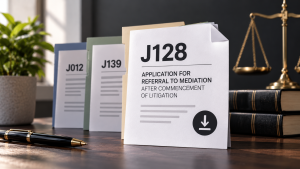
Form J128 (MED-3): Application for Referral to Mediation
Download the South African J128 (MED-3) court-annexed mediation form and understand its purpose, historical use and…
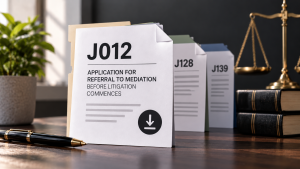
J012 Court Application – For Referral To Mediation (South Africa)
Form J012 (MED-1): Application for Referral to Mediation Download the South African J012 (MED-1) court-annexed mediation…

Download Guide: What to do for Civil, Accidents, Neighbours & Contracts
Civil disputes often start with something relatively simple: a neighbour’s damaged wall, an unpaid invoice, a…

Download Guide: What to do for Disciplinary Hearing Mediation?
Being called into a disciplinary hearing can be unsettling. One moment you’re doing your job, and…

Download Guide: What to do for divorce mediation?
Separating from someone you once planned a future with is rarely simple. There may be a…