
Certain words and phrases in conversation carry more weight than we realise. Labels like narcissist or bi-polar, or phrases like “you always”, “you never”, “everyone”, “you know everything”, or “you’re stubborn” may seem natural in the heat of disagreement, but they rarely help.
Why these words are dangerous
These “bad words” have a common effect: they put the other person on the defensive, escalate conflict, and shut down dialogue.
Take “narcissist”, for example. Unless someone has been professionally diagnosed, using the term in everyday conversation is often a way of saying: “I want things my way, and if you disagree, it must be your fault.” It frames disagreement as a character flaw rather than a difference of opinion.
Similarly:
- “You always…” or “You never…” exaggerates behaviour, turning observations into attacks.
- Labels like “bi-polar” used loosely reduce a complex human being to a stereotype.
- Generalisations like “everyone” or accusations of stubbornness imply judgment instead of observation.
The result? Communication stalls. Feelings get hurt. Misunderstandings grow.
A better approach
The alternative is simple: replace judgment with curiosity, labels with observations, and absolutes with specifics.
- Instead of “You always ignore me”, try “When you didn’t respond to my message yesterday, I felt ignored.”
- Instead of “You’re stubborn”, try “I notice we struggle to reach agreement on this topic — can we explore why?”
- Instead of “You’re a narcissist”, try “I feel frustrated because it seems like my perspective isn’t being considered — can we find a solution that works for both of us?”
Small changes in wording create space for understanding instead of conflict. Words have power, use them to connect, not to wound.


Why Winning in Court Could Feel Like Losing
When you’re in a serious dispute, the first usual thought is to get an attorney. And…

Should I use a mediator or an attorney for my divorce?
Most people go into conflict thinking they’re fighting for justice. Somewhere along the way though, the…
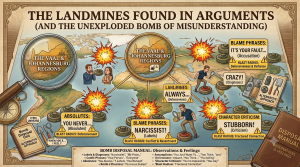
The Landmines found in Arguments
Words matter. And some words? They explode. Labels, blame, and absolutes can turn even the calmest…

The Danger of “Bad Words” in Communication
Certain words and phrases in conversation carry more weight than we realise. Labels like narcissist or…

Negotiation Is Chess, Not War
Many people approach negotiation like a fight, voices raised, egos at max, demands and half-baked threats…

Negotiation Skills Everyone Can Use
Negotiation isn’t limited to boardrooms or slick sales pitches. It’s for anyone trying to get someone…

Managing Disputes Without Losing Your Cool
Disagreements happen—whether it’s a business clash, a family argument, or someone taking your parking spot. Tempers…

7 Common Communication Mistakes
Effective communication is one of the most important skills in any relationship, whether at work, at…

Reading Between the Lines: Understanding Body Language
Humans communicate constantly, but not always with words. A twitching foot, a raised eyebrow, or crossed…