
Mediation works best when everyone approaches it with respect, preparation, and a focus on solutions. We guide people through disputes with professionalism and care—but your attitude and behavior play a huge role in the process. Here’s what you need to know.
Preparation is Key
Before your mediation session:
- Gather relevant information – collect any documents, notes, or examples that help explain your position clearly.
- Clarify your goals – know what outcomes are most important to you, and what you’re willing to compromise on.
- Be mentally ready – approach the session with a mindset of collaboration, not confrontation.
During the Session: Do’s and Don’ts
✅ Do:
- Listen actively – focus on understanding the other party’s perspective, not just preparing your response.
- Speak calmly and respectfully – use neutral language, speak clearly, and stay concise.
- Follow the mediator’s guidance – mediators keep discussions productive and balanced.
- Focus on solutions – aim for resolutions that benefit everyone, rather than “winning.”
- Maintain confidentiality – what happens in mediation stays in mediation.
❌ Don’t:
- Interrupt or talk over others – allow everyone to share their perspective.
- Show frustration or antagonism – sighs, eye-rolling, sarcastic comments, or aggressive gestures can derail discussions.
- Bring threats, pressure, or outside influence – these actions undermine trust.
- Use the session as a platform for venting – endless rehashing of old conflicts does not help reach a resolution.
- Ignore instructions from the mediator – their guidance is essential to a productive session.
- Record or share the session externally – confidentiality rules are strict.
Non-Verbal Communication Matters
Even if you’re careful with your words, body language speaks volumes. In mediation:
- Avoid sighs, eye-rolling, crossed arms, or any gestures that might appear dismissive or antagonistic.
- Keep your posture open and attentive.
- Nod or provide subtle cues to show you’re listening without interrupting.
Remember: non-verbal signals can either build trust or create tension, so stay mindful of your actions.
The Bottom Line
Mediation works best when everyone comes prepared, respectful, and ready to find solutions. The way you speak, how you act, even your body language—it all sets the tone and helps create a safe space for successful agreements.
Go in with an open mind, stay calm, and focus on resolution, and you give everyone the best chance of walking away with a positive outcome.


The Role of the Family Advocate
When parents separate or disagree about their children, the conflict can quickly become more complicated than…
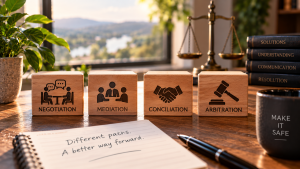
Types of Alternative Dispute Resolution (ADR)
When people hear the word dispute, they often imagine lawyers, courtrooms, legal bills and months of…

The Landmines Found in Destructive Arguments: 5 Things That Make Conflict Worse
Have you ever been in an argument that was going reasonably well until someone said that…

The Danger of “Bad Words”: Why What You Say Isn’t Always What People Hear
Have you ever said something completely reasonable, only to watch the other person react as though…

What Happens During Negotiations?
We make negotiation practical, strategic, and results-focused. Our negotiators act on your behalf, protecting your interests…