
Separating from someone you once planned a future with is rarely simple. There may be a home to divide, finances to untangle, parenting arrangements to negotiate and difficult conversations neither of you particularly wants to have.
And somewhere between the hurt, frustration and uncertainty, important decisions still need to be made.
But does ending a relationship have to mean going to war?
Not necessarily.
Divorce and separation mediation offers a structured way for couples and parents to work through disagreements with the assistance of an impartial mediator. Rather than focusing on blame or deciding who was right, mediation helps participants identify what needs to happen next.
From parenting plans and living arrangements to property division, maintenance discussions and financial responsibilities, mediation can help parties explore practical agreements while retaining a voice in the decisions that affect their futures.
Our free Divorce & Separation Mediation Guide explains how mediation works in South Africa, what you may need to prepare and how to approach difficult decisions without unnecessarily escalating conflict.
Whether you’re considering separation, already living apart or navigating divorce proceedings, understanding your options can help you make more informed decisions.
Because sometimes, the most important part of a separation isn’t deciding who was right.
It’s deciding what happens next.
Frequently asked questions
Is divorce mediation legally binding?
The mediated agreement itself usually isn’t automatically binding. It becomes enforceable once it is reviewed, formalised and, where required, approved by a court or turned into a signed legal agreement by your lawyers.
Do we need lawyers if we’re mediating?
You don’t need a lawyer present in the room, but it’s strongly recommended that each person has independent legal advice before signing anything, so you understand your rights and the agreement holds up later.
What if we can’t agree on everything?
That’s common. Mediation can resolve some issues and leave others for further negotiation or court. A partial agreement still narrows what has to be formally decided elsewhere.
Is mediation appropriate if there was abuse in the relationship?
Not always. A good mediator screens for this during intake and may recommend an alternative process where there is a power imbalance, safety concern, or history of coercive control.
How much does divorce mediation cost compared to court?
Costs vary by mediator and number of sessions, but mediation is typically a fraction of the cost of a fully litigated divorce, largely because it takes far fewer hours of paid professional time.

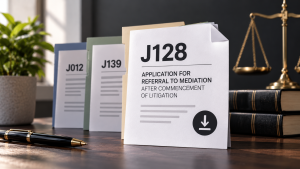
Form J128 (MED-3): Application for Referral to Mediation
Download the South African J128 (MED-3) court-annexed mediation form and understand its purpose, historical use and…
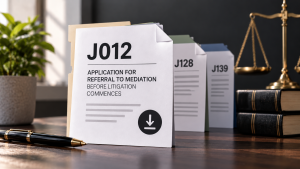
J012 Court Application – For Referral To Mediation (South Africa)
Form J012 (MED-1): Application for Referral to Mediation Download the South African J012 (MED-1) court-annexed mediation…

Download Guide: What to do for Civil, Accidents, Neighbours & Contracts
Civil disputes often start with something relatively simple: a neighbour’s damaged wall, an unpaid invoice, a…

Download Guide: What to do for Disciplinary Hearing Mediation?
Being called into a disciplinary hearing can be unsettling. One moment you’re doing your job, and…

Download Guide: What to do for Unfair Treatment?
Being treated unfairly at work can leave you feeling frustrated, powerless and uncertain about what to…