
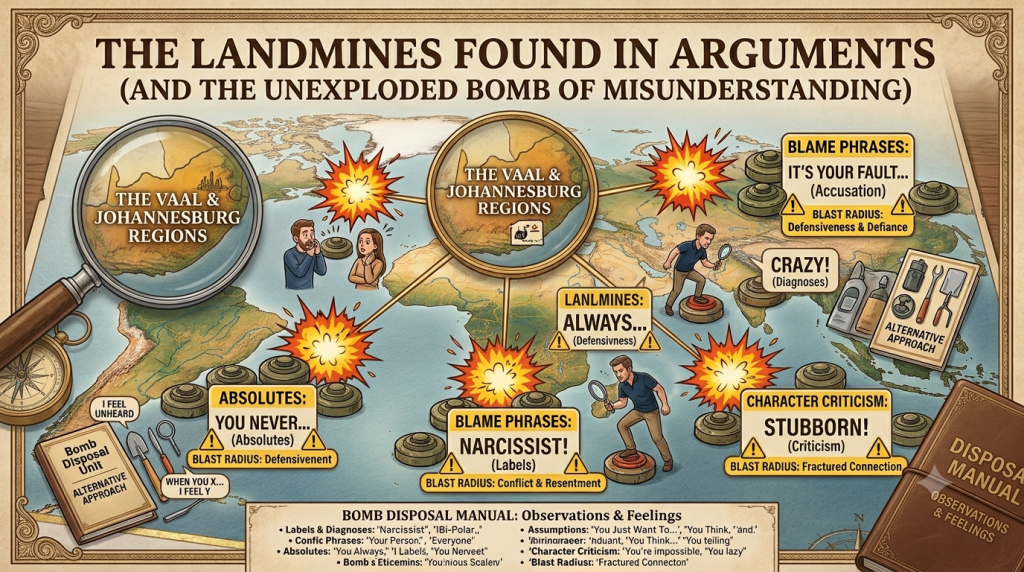
Words matter. And some words? They explode. Labels, blame, and absolutes can turn even the calmest discussion into a fight, leaving hurt, frustration, and misunderstanding in the blast radius.
Here’s an expanded list with examples:
1. Labels or Diagnoses (often misused)
- Narcissist
- Bi-polar
- Lazy
- Stubborn
- Crazy / Insane
- Toxic
Why it’s bad: Reduces a complex human being to a single word, often used to justify frustration rather than open discussion.
2. Absolutes
- You always…
- You never…
- Everyone…
- Nobody…
- Everything…
Why it’s bad: Exaggerates reality, makes people defensive, and removes nuance.
3. Blame or Accusation Phrases
- You make me…
- It’s your fault…
- You don’t care…
- You don’t understand…
- You know everything / think you know everything…
Why it’s bad: Places responsibility entirely on the other person, shutting down dialogue instead of encouraging understanding.
4. Assumptions or Mind Reading
- You just want to…
- You don’t really…
- You think…
- You always try to…
Why it’s bad: Assumes intent or motive, often incorrectly, which leads to defensiveness.
5. Absolutes in Criticism
- You’re impossible
- You’re unreasonable
- You’re selfish
- You’re weak / strong (in a negative or judgmental way)
- You don’t care about anyone
Why it’s bad: Labels character instead of describing behaviour, making reconciliation much harder.
Key idea: The “badness” of these words isn’t about politeness, it’s about impact on communication.
They trigger defensiveness, escalate conflict, and replace understanding with judgment.
Alternative approach: Use observations, specific examples, and feelings:
- Instead of “You never listen” → “When I was explaining X, I felt unheard.”
- Instead of “You’re selfish” → “I feel frustrated because my needs weren’t considered here.”
- Instead of “You’re a narcissist” → “I feel frustrated because it seems like my perspective isn’t being considered.”



Why Winning in Court Could Feel Like Losing
When you’re in a serious dispute, the first usual thought is to get an attorney. And…

Should I use a mediator or an attorney for my divorce?
Most people go into conflict thinking they’re fighting for justice. Somewhere along the way though, the…
The Landmines found in Arguments
Words matter. And some words? They explode. Labels, blame, and absolutes can turn even the calmest…

The Danger of “Bad Words” in Communication
Certain words and phrases in conversation carry more weight than we realise. Labels like narcissist or…

Negotiation Is Chess, Not War
Many people approach negotiation like a fight, voices raised, egos at max, demands and half-baked threats…

Negotiation Skills Everyone Can Use
Negotiation isn’t limited to boardrooms or slick sales pitches. It’s for anyone trying to get someone…

Managing Disputes Without Losing Your Cool
Disagreements happen—whether it’s a business clash, a family argument, or someone taking your parking spot. Tempers…

7 Common Communication Mistakes
Effective communication is one of the most important skills in any relationship, whether at work, at…

Reading Between the Lines: Understanding Body Language
Humans communicate constantly, but not always with words. A twitching foot, a raised eyebrow, or crossed…